Showing posts with label technology. Show all posts

Sunday, March 11, 2007

Pecha Kucha


I had to post at least once while sitting in a SXSW talk, so here it is...

Can Pecha Kucha be a valuable format for condensed information transfer? I'm slowly processing Edward Tufte's work, and I buy the idea that we do harm by excessive filtering of information to make it palatable to our audience. But for certain topics, environments, and audiences, it makes a lot of sense to condense material.

Pecha Kucha is a style of presentation in which you present 20 slides for 20 seconds each. Transitions are timed, which forces the presenter to make quick and steady progress. The total presentation time comes out at 6 minutes and 40 seconds. Thinking about it reminds me of Dick Hardt's legendary Identity 2.0 presentation.

The Wikipedia article mentions the value for business applications, an area that hits close to home:
This is primarily a device to help ... force presenters to be more focused in their message, allow them to flow uninterrupted, and ultimately to avoid the "death by powerpoint" syndrome, of sitting through long and often tedious powerpoint presentations.

It could be a digestible format for some of the BarCamp presentations.

Sunday, February 4, 2007

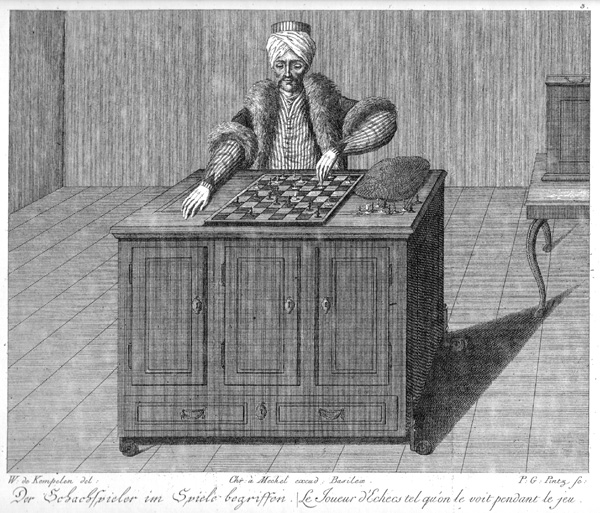
Mechanical Turk: The Search for Jim Gray


Computer Scientist Jim Gray has been missing at sea since January 28 after he didn't return from a trip to the Farallon Islands in his yacht.

After the Coast Guard failed to find him, a satellite scan was performed and the images were posted to Amazon's Mechanical Turk.

The fact that you can join the search for Jim Gray is, I think, a wonderful sign of the power of technology to both equip people and to help them organize around common goals.

Being the weirdo that I am, my next thought was, "How can you get more people to join in?", and I immediately thought of a technique for circumventing CAPTCHAs using porn surfers that my friends and I discussed. This porn CAPTCHA idea has surfaced independently on a post by another blogger, titled The Power of Porn.

Imagine it: "Yes, yes, we'll get right to the T-n-A, but first, please check this satellite image for indications of foreign objects..."

Of course, one of the problems with this approach lies in a critical difference between this and CAPTCHA problems. CAPTCHA solving problems are effectively supervised learning problems -- the answer can be checked immediately, and if the spammer gets an error message instead of the free email account (or whatever), then they can try again. The case of examining satellite imagery for foreign objects is unsupervised, in that, if a participant happens to miss the little speck of sail boat in the picture, or just blindly clicks an answer to get to the porn, then there's no easy way to check it.

One solution to this problem is a critical part of Mechanical Turk -- test problems. For the satellite imagery problem, you first inject one or more test pictures, which you have specially created and know whether there is a foreign object present. Then you can test participants and grade them before you send them the real thing.

I'm telling you, there's power in harnessing the collective intelligence.

Thursday, January 18, 2007

Interface Gripe #1

I'm fond of complaining about user interfaces. Isn't it everyone's right to be an armchair interface designer? Here's an example that's temporally relevant (to me) if not very significant in its severity.


A casual look at the graph above leaves me thinking that the x axis for the main graph is the one with the years marked out on it. I think this happens for several reasons:
  • The actual x axis doesn't pop out at me (it has more marks and less contrast)
  • There's not enough vertical separation between the two graphs - I think even having a thin line of separation would help.
  • The year-scale graph at the bottom is so faint it's hard for me to see that it's there.
  • The year labels on the x axis for the year-scale graph are above the graph, instead of below it.
I appreciate what they're doing with the moving zoom window. Maybe they could separate the two graphs just a bit more, and maybe show a zoom-like indicator, such as this (forgive the aliasing and general poor mod job):


This is a beta (but hasn't that term suffered a meaning decay?), so they're actively making changes. They've done some interesting things to it recently in which they annotate the graph with news stories that were released at the associated point in time. They've also got a handy management view where you can quickly find out about the recent stock activity of the executives.

Sunday, January 14, 2007

RARFF - A simple ARFF library in Ruby

RARFF is a very simple ARFF handling library for Ruby that I wrote for kicks. ARFF is a file format popularized by Weka, the machine learning toolkit.

I've had a couple of cases where I collected some data using Ruby and I wanted to analyze it with Weka. This makes it a bit easier.

Saturday, January 13, 2007

Wartoddling

A stroller plus a wireless laptop equals this. TUAW called it "wartoddling", but the voice synth should be pitched up a few octaves.


Transactive Memory Systems

Daniel Wegner talks about the concept of transactive memory, a memory system that spans individuals. I first encountered this concept while reading The Tipping Point, and I couldn't help thinking about how my laptop forms part of my transactive memory system. Why should I remember appointments, account information, emails, phone numbers, addresses, or anything else that a machine is better at? Of course, I have no end of gripes about the current capabilities of machines in this area. I wonder if the iPhone will help ...